
How to Descale a Tankless Water Heater: Step-by-Step Guide
Share
How to Descale a Tankless Water Heater (The Right Way)
Tankless water heaters are efficient, compact, and widely used in residential and light commercial systems—but they are not maintenance-free.
One of the most important maintenance tasks is descaling the heat exchanger to remove mineral buildup caused by hard water.
If this step is ignored, performance drops quickly:
- Reduced hot water flow
- Longer heating times
- Higher energy usage
- Premature system failure
This guide walks through a proven descaling process used by plumbing professionals.
Why Tankless Water Heaters Scale Up
Most scale buildup comes from minerals in the water supply, especially:
- Calcium
- Magnesium
- Hard water deposits
Over time, these minerals attach to the heat exchanger and restrict flow.
Even a small amount of buildup can significantly reduce efficiency.
How Often Should You Descale?
General recommendation:
- Once per year for average water conditions
- Every 6 months in hard water areas or heavy-use systems
What You Need to Descale a Tankless Water Heater
Professional descaling typically requires:
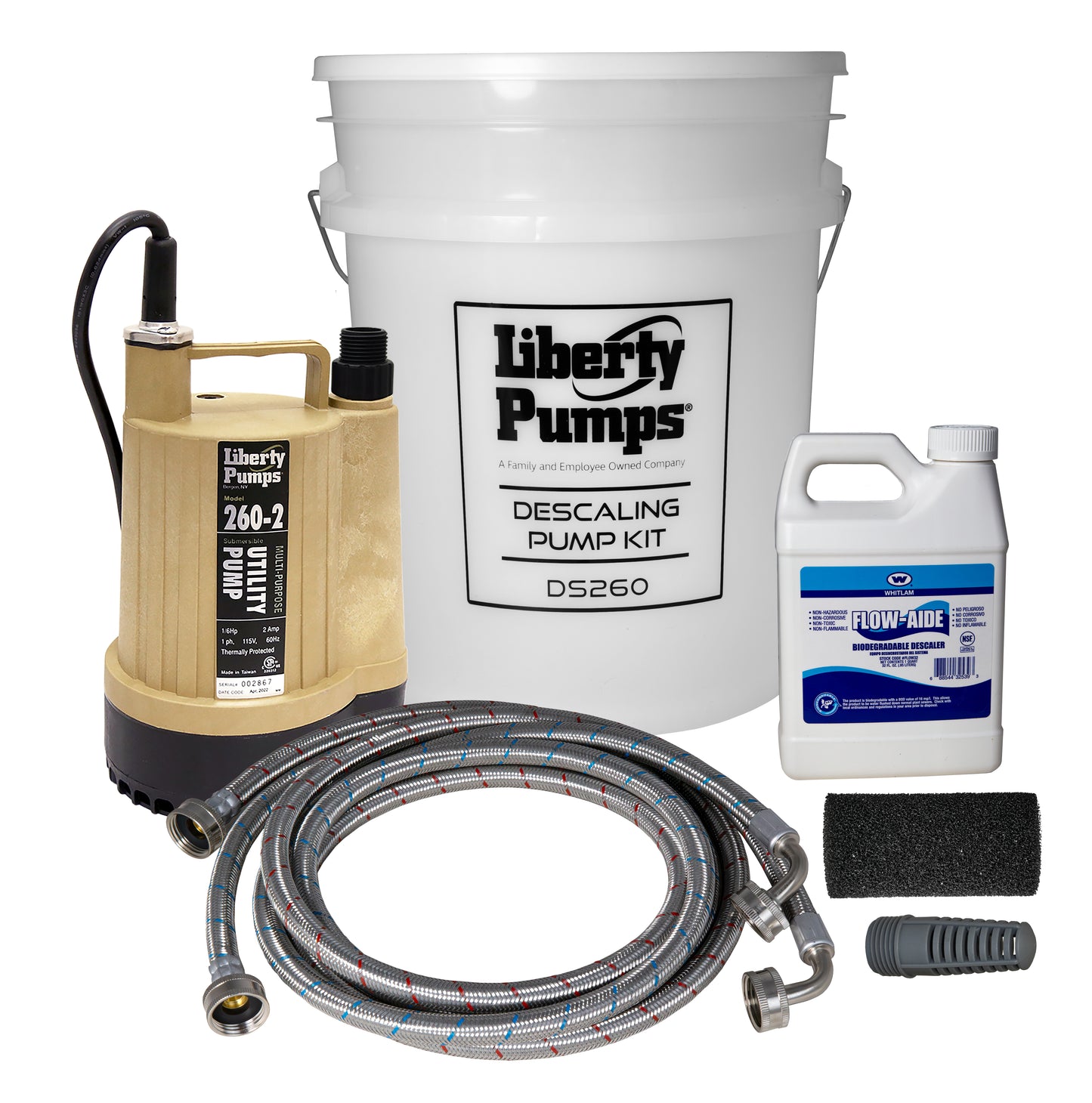
- Circulation pump
- Descaling solution (or approved descaler)
- Hoses for inlet/outlet connections
- Bucket or reservoir
A circulation pump is critical because it pushes the solution through the heat exchanger in a closed loop.
Need a Kit for Easy Descaling?
Step-by-Step: How to Descale a Tankless Water Heater
1. Turn off power and gas supply
Safety first—shut down the system completely before starting.
2. Isolate the unit
Close the water shutoff valves to isolate the heater from the main system.
3. Connect circulation pump
Attach hoses from the pump to:
- Cold water inlet
- Hot water outlet
This creates a closed-loop system for flushing.
4. Add descaling solution
Fill the bucket or reservoir with descaling solution.
Some professionals use vinegar, but commercial descalers are more effective for heavy buildup.
5. Circulate the solution
Run the pump for 30–60 minutes, allowing the solution to break down mineral scale inside the heat exchanger.
6. Flush with clean water
After descaling:
- Drain solution
- Refill with clean water
- Flush system thoroughly
This removes any remaining residue.
7. Restore system
Reconnect valves, restore power/gas, and verify proper operation.
Professional Insight (What Experienced Technicians Do Differently)
In a recent technician walkthrough shared on social platforms, a plumbing professional demonstrated a simple but effective method using a circulation pump and descaling solution to restore tankless water heater performance.
The key takeaway wasn’t the tools—it was the consistency:
- Regular maintenance prevents most failures
- Waiting until performance drops makes the process harder and more expensive
Products That Make Descaling Easier
Dade Pump supplies equipment commonly used in professional descaling setups, including:
- Circulation pumps for closed-loop flushing
- Replacement components for water systems
- Pumps used in maintenance and service applications
Using the right equipment makes the process faster, safer, and more effective.
Signs Your Tankless Water Heater Needs Descaling
Watch for:
- Reduced hot water pressure
- Fluctuating water temperature
- Longer heating delays
- Error codes on the unit
- Increased energy usage
These are early indicators of scale buildup inside the system.
Final Thought
Tankless water heaters are highly efficient—but only when maintained properly.
Descaling is not optional maintenance. It’s what keeps the system performing at its rated efficiency.
A simple annual flush can extend system life, reduce energy costs, and prevent unexpected failures.
Frequently Asked Questions About Tankless Water Heater Descaling
How often should you descale a tankless water heater?
Most tankless water heaters should be inspected and descaled according to the manufacturer's maintenance schedule, often approximately once per year. Homes with hard water, high hot water usage, or significant mineral buildup may require descaling every six months or more frequently. Water quality, usage, and the manufacturer's recommendations determine the appropriate maintenance interval.
Can you use vinegar to descale a tankless water heater?
Yes, white vinegar can be used to descale certain tankless water heaters when approved by the manufacturer. For example, some Rinnai models specify undiluted food-grade white vinegar for flushing mineral deposits. Other manufacturers may recommend specific commercial descaling solutions. Always consult your water heater's maintenance manual before selecting a cleaning solution, and never mix descaling chemicals.
How long does it take to descale a tankless water heater?
The circulation portion of the descaling process commonly takes approximately 30–60 minutes, depending on the water heater model, cleaning solution, and manufacturer's instructions. Additional time is required for shutting down the unit, connecting hoses, flushing with clean water, and restoring operation. Some manufacturers specify longer circulation periods, so always follow the procedure for your specific model.
What type of pump is used to descale a tankless water heater?
A compatible circulation pump, often a submersible utility pump, is used to move the approved descaling solution through the water heater's heat exchanger. The pump connects to the heater's service valves using hoses, creating a closed-loop flushing system.
When selecting a descaling pump, consider its flow rate, hose connections, materials, and compatibility with the cleaning solution. Not every utility or circulation pump is suitable for chemical descaling.
Can you descale a tankless water heater yourself?
Some tankless water heaters can be descaled by knowledgeable homeowners using the proper equipment and manufacturer-approved procedures. However, the process involves isolating water connections, handling cleaning solutions, and following electrical or gas appliance safety precautions.
If you're unfamiliar with your heater's service valves or maintenance requirements, hiring a qualified plumbing or service professional is the safer option.
What happens if you don't descale a tankless water heater?
Over time, calcium, magnesium, and other dissolved minerals can accumulate inside the heat exchanger. Excessive scale buildup may restrict water flow, reduce heating efficiency, contribute to temperature fluctuations, trigger equipment errors, and shorten the water heater's service life.
Routine descaling helps remove mineral deposits before they create more significant performance problems.
How do you know if your tankless water heater needs descaling?
Common signs of possible mineral buildup include reduced hot water flow, inconsistent water temperatures, longer heating times, and manufacturer-specific maintenance or error codes.
These symptoms can also indicate other plumbing or equipment problems. If performance does not improve after proper maintenance, additional troubleshooting may be necessary.
Do you need a special pump to flush a tankless water heater?
You need a pump suitable for circulating the approved cleaning solution through the water heater at the flow rate required by its manufacturer. A compatible submersible utility pump may work, but pump materials, chemical resistance, and performance specifications must be verified.
Dade Pump & Supply offers pumps and technical assistance to help customers evaluate equipment for maintenance applications. Contact the team to confirm suitability before purchasing a pump for tankless water heater descaling.